Kaxite Sealing manufactures PTFE piston rings by precision machining from 100% virgin PTFE or filled PTFE compounds — glass, carbon-graphite, bronze and MoS2 — plus pure PEEK for very high PV service. Chemically inert across pH 0–14, service range -200 to +260 °C, coefficient of friction 0.05–0.15, compressive strength 15–40 MPa depending on filler. Self-lubricating and oil-free — ideal for dry-running compressors, gas meters, hydraulic pistons and pure-media reciprocating equipment where oil carry-over is unacceptable. Supplied in spools or rings to cylinder bore and drawing, with butt-cut, step-cut, angle-cut and scarf-cut joints. OEM sizes, FDA 21 CFR 177.1550 grades and 7–15 day lead times.
Three reasons procurement teams in compressor, hydraulics, gas metering and semiconductor industries specify Kaxite as their PTFE rings supplier.
PTFE piston rings run with minimal or no external lubrication. This eliminates oil carry-over into the compressed medium — critical for breathable air, oxygen, food-grade air and semiconductor gas service.
Virgin PTFE for chemical purity, glass-filled for wear resistance, carbon-graphite for high PV and dry running, bronze-filled for high load and thermal conductivity, MoS2-filled for low break-away torque.
Non-standard bores, special profiles (L-shape, T-shape, stepped), multi-part designs and joint types to drawing. OEM marking, material certificates and 7–15 day lead time. Samples before bulk.
Precision-machined from virgin or filled PTFE to cylinder bore diameter and drawing. Available in five standard grades — virgin, glass, carbon-graphite, bronze and MoS2-filled — plus pure PEEK for very high PV applications. Rider, wearing and guide rings supplied in the same material range.
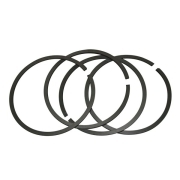
Each grade is engineered for a distinct combination of chemical resistance, wear resistance, PV capability and thermal conductivity. Use this guide to shortlist the right compound before requesting a quotation.
100% unfilled PTFE. Maximum chemical purity, excellent electrical insulation and lowest friction. Semiconductor, chemical pure media, food contact.
White15–25% glass fiber. Improved wear resistance, reduced creep and higher compressive strength for general industrial hydraulics, air compressors and moderate-duty pumps.
White / Grey15–25% carbon graphite. Excellent wear and PV capability, good thermal conductivity, self-lubricating. High-speed compressors and dry-running service.
Black40–60% bronze powder. High thermal conductivity, excellent wear resistance and good load-bearing. Heavy-duty hydraulic pistons and high-load compressors.
Bronze5% molybdenum disulfide. Enhanced lubrication in dry environments, lower friction and improved break-away torque. Gas meters, pneumatic cylinders, limited-lubrication duty.
Dark Grey| Nominal Bore | Radial Wall (T) | Axial Width (W) | Standard Gap | OD Tolerance |
|---|---|---|---|---|
| 10 – 50 mm | 1.5 / 2.0 / 2.5 mm | 2.5 / 3.0 / 4.0 mm | 0.5 – 1% of OD | ±0.05 – ±0.1 mm |
| 51 – 150 mm | 2.5 / 3.0 / 4.0 mm | 4.0 / 5.0 / 6.0 mm | 0.5 – 1% of OD | ±0.08 – ±0.15 mm |
| 151 – 300 mm | 4.0 / 5.0 / 6.0 mm | 6.0 / 8.0 / 10.0 mm | 0.5 – 1% of OD | ±0.1 – ±0.2 mm |
| Above 300 mm | Custom | Custom | Custom | Custom |
Oil-free air, oxygen and process gas compressors where oil carry-over must be eliminated. Carbon-graphite filled grades are standard.
Heavy-duty hydraulic cylinders and pumps handling aggressive fluids. Bronze-filled grades for high load and thermal conductivity.
Rotary and reciprocating gas meters, flow meters and pneumatic cylinders requiring low break-away torque and non-contaminating sealing.
Reciprocating and plunger pumps in acid, alkali and solvent service. Pairs with our PTFE packing for combined dynamic sealing.
High-purity gas delivery, vacuum pumps and sterile reciprocating equipment. Virgin PTFE and FDA grades with zero extractables.
Compressors and pumps in CO2, nitrogen and food-grade air service. FDA 21 CFR 177.1550 compliant grades available.
For chemically aggressive, high-purity media, virgin PTFE (KX-PTFE01) is best. For general industrial use with wear concerns, glass-filled (KX-PTFE15) is robust. For high-speed, dry, or high-PV applications, carbon-filled (KX-PTFE25) offers excellent wear characteristics. For high heat dissipation and load, bronze-filled (KX-PTFE20) is ideal. Share pressure, speed, temperature and media details for a precise recommendation.
Yes — one of their primary advantages. The self-lubricating nature of PTFE, especially compounded with carbon or MoS2, allows effective operation with little to no external lubrication. This eliminates oil contamination of the compressed medium, crucial for breathable air, food-grade air, oxygen and many chemical processes.
The gap allows for thermal expansion of the ring at operating temperature. If too small, ring ends butt together under heat, causing excessive radial pressure, rapid wear or cylinder scoring. Standard calculation is 0.5% to 1.0% of cylinder bore diameter. Kaxite machines the gap precisely based on your operating temperature range and material thermal expansion coefficient.
Use installation sleeves or cones to gently stretch the ring over the piston and into the groove. Never roll or twist the ring onto the piston — this can cause permanent deformation or stress fractures. Ensure the groove is clean, deburred and to specification. The ring should move freely in the groove without sticking.
Common causes: excessive clearance or improper groove design leading to extrusion; operating beyond the material PV limits causing overheating; chemical attack from media not compatible with the specific filler; installation damage; or excessive cylinder runout and misalignment causing uneven wear.
Metallic rings rely on a thin oil film for lubrication and sealing, can scuff or corrode in harsh chemicals and may contaminate pure media. PTFE rings offer inherent lubrication, outstanding chemical resistance and run cleanly with minimal or no lubrication. They are lighter, quieter and better suited for extreme temperatures without galling.
Yes. Beyond standard sizes we engineer custom solutions — non-standard dimensions, special profiles (L-shape, T-shape, stepped, multi-part with backup rings), proprietary material blends and complex geometries. Send your drawing or cylinder bore data for engineering feedback within 24 hours.
Send us your cylinder bore diameter, radial wall and axial width, groove dimensions, gap type, operating temperature, media and grade preference or finished-part drawing. Our export team replies within 24 hours and confirms grade selection, lead time, packaging and documentation before you place a bulk order.