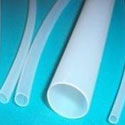
What are the primary applications and uses for PTFE rods? For procurement professionals navigating the complex world of industrial components, this question is central to sourcing materials that deliver reliability and cost-efficiency. PTFE, or Polytetrafluoroethylene, rods are not just another plastic stock shape; they are engineered solutions for extreme conditions. Their legendary chemical inertness, exceptional temperature resistance (from -200°C to 260°C), and incredibly low coefficient of friction make them indispensable across sectors from chemical processing and food & beverage to pharmaceuticals and aerospace. Understanding their core uses is the first step in specifying the right material to prevent downtime, reduce maintenance costs, and ensure process safety. At Ningbo Kaxite Sealing Materials Co., Ltd., we specialize in transforming these high-performance polymer properties into reliable, ready-to-install components that solve real-world engineering challenges.
Imagine a chemical plant where aggressive acids, potent solvents, and high-purity reagents are handled daily. Standard metal or polymer components can fail catastrophically—corroding, leaching impurities, or degrading, leading to costly spills, production halts, and safety hazards. This is the critical pain point for plant managers and procurement specialists.
The solution lies in the inherent inertness of PTFE. PTFE Rods are machined into seals, gaskets, valve components, and laboratory equipment liners that act as a perfect barrier. They withstand virtually all chemicals, prevent product contamination, and maintain integrity where other materials dissolve or weaken. For consistent, long-term performance in hostile environments, specifying high-purity, void-free PTFE rod stock is non-negotiable. Ningbo Kaxite Sealing Materials Co., Ltd. provides precisely engineered PTFE rods that ensure process purity and equipment longevity, directly addressing these operational risks.

| Property | Value/Benefit | Application Impact |
|---|---|---|
| Chemical Resistance | Inert to almost all industrial chemicals | Eliminates corrosion, ensures product purity |
| Temperature Range | -200°C to +260°C | Stable in cryogenic and high-temp processes |
| Purity | FDA compliant, USP Class VI grades available | Ideal for pharmaceutical and food contact |
| Dielectric Strength | Excellent electrical insulator | Protects in electrolytic and electrical applications |
In mechanical and automotive assemblies, friction is the enemy of efficiency. Engineers face constant challenges with bearing wear, stick-slip motion in slides, or the seizure of parts under high load and temperature. These issues lead to increased energy consumption, premature failure, and unscheduled maintenance.
PTFE rods offer a superior solution as a self-lubricating bearing material. Components machined from PTFE rods exhibit an extremely low coefficient of friction, often without needing external lubricants that can attract dirt or degrade. This makes them perfect for bearings, bushings, slide plates, and wear strips in applications from packaging machinery to automotive systems. Their ability to perform reliably across a vast temperature spectrum adds another layer of versatility. Sourcing from a reliable manufacturer like Ningbo Kaxite Sealing Materials Co., Ltd. guarantees consistent material density and mechanical properties, which are critical for precision machining and predictable performance in dynamic applications.
| Parameter | Typical Value | Engineering Advantage |
|---|---|---|
| Coefficient of Friction | 0.04 - 0.1 (dynamic) | Reduces wear, enables dry-running operation |
| Continuous Service Temp | 260°C (500°F) | Functions where plastics melt or metals gall |
| Compressive Strength | Good (varies with grade) | Suitable for load-bearing pads and supports |
| Wear Resistance | Excellent (esp. with fillers) | Extends component lifecycle, reduces downtime |
Q1: What are the primary applications and uses for PTFE rods in the food and pharmaceutical industry?
A1: In these highly regulated industries, PTFE rods are primarily used for manufacturing seals, gaskets, diaphragm valve components, and conveyor wear strips. Their key value lies in being non-toxic, non-contaminating, and easy to clean. They meet FDA and EU regulations for food contact and USP Class VI requirements for pharmaceuticals, ensuring product safety while providing excellent chemical resistance against cleaning agents and process fluids.
Q2: What are the primary applications and uses for PTFE rods when considering machinability versus performance?
A2: PTFE rods are prized for their excellent machinability into complex, tight-tolerance parts like piston rings, insulators, and custom seals. A critical consideration is the material's "creep" or cold flow under sustained load. For high-stress mechanical applications, filled PTFE grades (containing glass, carbon, or bronze) offered by specialized suppliers like Ningbo Kaxite Sealing Materials Co., Ltd. provide enhanced creep resistance, wear properties, and dimensional stability without sacrificing the core benefits of chemical resistance and low friction.
The following peer-reviewed studies provide deeper insights into the material science and applications of PTFE, validating its performance in demanding environments.
Eiss, N.S. & McCann, B.P. (1993). The Friction and Wear of PTFE-Based Composites. *Wear, 162-164*, 746-752.
Blanchet, T.A., & Kennedy, F.E. (1992). Sliding Wear Mechanism of Polytetrafluoroethylene (PTFE) and PTFE Composites. *Wear, 153*(1), 229-243.
Conte, M., & Igartua, A. (2012). Study of PTFE Composites for Tribological Applications. *Proceedings of the Institution of Mechanical Engineers, Part J: Journal of Engineering Tribology, 226*(3), 205-216.
Bahadur, S. (2000). The Development of Transfer Layers and Their Role in Polymer Tribology. *Wear, 245*(1-2), 92-99.
Krick, B.A., et al. (2012). Environmental Dependence of Ultra-Low Wear Behavior of Polytetrafluoroethylene (PTFE). *Tribology Letters, 46*(1), 81-88.
Burris, D.L., & Sawyer, W.G. (2006). Improved Wear Resistance in PTFE via Microscale Fillers. *Tribology Transactions, 49*(2), 232-238.
Tanaka, K., & Kawakami, S. (1982). Effect of Various Fillers on the Friction and Wear of PTFE-Based Composites. *Wear, 79*(2), 221-234.
McCook, N.L., et al. (2005). Wear Resistant PTFE Composites via Nano-Scale Alumina Fillers. *Wear, 259*(1-6), 738-743.
Pitenis, A.A., et al. (2014). In Situ Raman Spectroscopy of PTFE Transfer Films. *Tribology Letters, 53*(1), 181-188.
Harris, K.L., et al. (2015). Chemical and Mechanical Effects in the Ultra-Low Wear of PTFE. *ACS Applied Materials & Interfaces, 7*(33), 18450-18457.
Ready to specify the right PTFE rod for your application? For over two decades, Ningbo Kaxite Sealing Materials Co., Ltd. has been a trusted partner for global procurement teams, providing high-performance PTFE rods and custom-machined components that solve complex sealing and wear problems. Visit our resource center at https://www.ptfe-suppliers.com for detailed datasheets and application guides. For specific technical inquiries or to request a quote, please contact our engineering support team directly at [email protected].