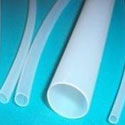
Picture this: you’re responsible for a critical chemical transfer line inside a high-pressure reactor system. Corrosive media flow at 40 bar, and the slightest leak could mean downtime, safety risks, and huge replacement costs. The question pounding in your mind is simple yet urgent: Can PTFE Pipe be used with high pressure chemicals? The answer isn’t just a yes or no — it’s about understanding exactly how PTFE performs under dual stress from caustic fluids and elevated pressure. PTFE (polytetrafluoroethylene) offers near-universal chemical resistance and a low coefficient of friction, but its creep behavior and limited mechanical strength at high temperatures demand careful selection and system design. In this guide, we’ll walk you through real-world scenarios many procurement engineers face, showing why leading chemical plants and OEMs trust seamlessly integrated PTFE pipe systems. Along the way, you’ll find actionable solutions, product insights from Ningbo Kaxite Sealing Materials Co., Ltd., and data-backed recommendations that help you confidently answer the question yourself — and then order with clarity.
Jump to a section:
Maintenance teams at a large petrochemical plant kept replacing stainless steel piping every eight months. The line was handling hot concentrated hydrochloric acid at 30 bar, and pitting corrosion ate through the walls quickly. Each unexpected failure caused a 6-hour shutdown. The pain was not only the material cost but the lost production. Their search for a permanent fix led them to evaluate PTFE-lined and solid PTFE pipes. Here’s the science that changed their mind: PTFE is inert to virtually all industrial chemicals up to 260°C, making it immune to the corrosion that plagued their metal system. But when it comes to pressure, understanding the limitations is essential. Solid PTFE pipe alone can handle moderate pressures — typically up to about 10–15 bar at ambient temperatures for unreinforced grades. By adding engineered fillers or using PTFE as a liner inside a metal housing, the pressure capacity can be pushed beyond 40 bar while retaining full chemical resistance. The key data below illustrates how different system configurations influence pressure ratings.

| Pipe Construction | Typical Max Pressure (bar, 20°C) | Temperature Limit | Chemical Compatibility |
|---|---|---|---|
| Unreinforced PTFE pipe | 10–15 | 260°C | Excellent |
| Glass-filled PTFE pipe | 18–25 | 200°C | Excellent, slight reduction in some media |
| PTFE-lined steel pipe | 40+ (limited by housing) | 260°C liner | Excellent |
By choosing a PTFE-lined carbon steel solution — a specialty of Ningbo Kaxite Sealing Materials Co., Ltd. — the plant eliminated corrosion failures and sustained full production runs. The lesson is clear: when the question “Can PTFE pipe be used with high pressure chemicals?” arises, the real answer is about matching the construction to the pressure-temperature envelope. Modern suppliers now offer customized pipe spools with flanges, PTFE bellows, and integrated gaskets precisely for such high-pressure chemical services.
A pharmaceutical manufacturer once replaced its old Hastelloy tubing with PTFE hose for transferring aggressive solvent under 35 bar. Leakage occurred three weeks in, right at the fittings. The culprit wasn't the PTFE material — it was the improper transition from flexible hose ends to rigid flanges. This scenario is all too common. The pain stems from overlooking that PTFE cold flows under sustained compression, so standard metal compression fittings gradually lose grip. The solution lies in using specialized PTFE flare fittings or a molded PTFE gasket face that mates with a backing flange. At Ningbo Kaxite Sealing Materials Co., Ltd., the production team precision-machines PTFE sealing surfaces with controlled compression stops, ensuring the gasket stress stays within the ideal range permanently. Combined with bolt tensioning procedures, these systems maintain a tight seal even when pressure cycles from 0 to 45 bar.
| Connection Type | Pressure Suitability | Maintenance Cycle |
|---|---|---|
| Standard compression fitting | Up to 10 bar | Quarterly re-torque |
| PTFE flared connection | Up to 30 bar | Annual inspection |
| Molded PTFE flange with controlled compression | Up to 50 bar | Visual check only |
For procurement professionals sourcing for high-pressure chemical lines, validating the connection design with the supplier is as important as the pipe material itself. A holistic package — pipe, flanges, and installation guidance — from a single expert source drastically reduces leak-related downtime.
Q: We plan to transfer 98% sulfuric acid at 38 bar. Is PTFE pipe safe and durable?
A: Absolutely, as long as you specify a PTFE-lined metal pipe or a glass-filled PTFE variant engineered for that pressure. Concentrated sulfuric acid at ambient temperature does not attack PTFE. The critical factor is the mechanical confinement — a loose PTFE liner can buckle under rapid pressure changes. That’s why suppliers like Ningbo Kaxite Sealing Materials Co., Ltd. offer vented PTFE-lined systems where the liner is mechanically bonded and equipped with weep holes to prevent collapse. Many chemical processors have used such configurations successfully for years, with zero corrosion and minimal maintenance. Always request full pressure-temperature rating curves and material test certificates before ordering.
When a water treatment facility upgraded its chlorine dioxide dosing line to operate at 28 bar, it purchased off-the-shelf virgin PTFE tubing. Within weeks, the tubing deformed at clamping points and began to blister. The intense oxidative environment coupled with the pressure load revealed the limitation: pure PTFE’s tendency to cold flow. The right fix came from switching to a modified PTFE grade with reduced permeability and higher deformation resistance. This scenario highlights why grade selection is the dividing line between success and premature failure. At Ningbo Kaxite Sealing Materials Co., Ltd., you can choose from virgin PTFE, glass-filled, carbon-filled, and modified PTFE (TFM™ type) depending on your exact pressure-chemical combination. The table below summarizes practical selection criteria.
| Grade | Pressure Capability Improvement | Best Suited Applications |
|---|---|---|
| Virgin PTFE | Baseline | Low-pressure (<10 bar) ultrapure chemicals |
| 15% Glass-filled PTFE | +45% compressive strength | Moderate pressure (up to 25 bar) with non-abrasive chemicals |
| 25% Carbon-filled PTFE | +35% compressive strength, better thermal conductivity | High pressure and temperature cycling |
| Modified PTFE (TFM™ equivalent) | Reduced cold flow, lower permeation | High-pressure oxidizers like chlorine dioxide |
Engaging the manufacturer early in the selection process helps avoid costly mismatches. Ningbo Kaxite Sealing Materials Co., Ltd. provides detailed data sheets and sample testing support so you can simulate real service conditions before full-scale procurement.
Q: I need a simple number — what is the highest pressure PTFE pipe can handle safely?
A: There’s no single figure because it depends on temperature, diameter, wall thickness, and whether the pipe is reinforced or used as a liner. A typical 1-inch Schedule 80 virgin PTFE pipe may have a working pressure around 12 bar at 23°C, but that drops to roughly 4 bar at 150°C. In contrast, a PTFE-lined steel pipe assembly from Ningbo Kaxite Sealing Materials Co., Ltd. can be rated for 50 bar or higher because the metal housing carries the load. When evaluating suppliers, look for those who perform burst testing per ASTM standards and can provide hydrostatic test reports. This data gives you the confidence to answer customer inquiries and build trust in your own supply chain.
An engineering contractor once installed beautiful PTFE piping in a solvent recovery unit, only to see connections loosen and leak within a month. The root cause? The hangers were spaced too far apart, allowing sag and localized stress at joints. High-pressure chemical lines demand attention to supports and thermal expansion. PTFE’s linear expansion coefficient is roughly ten times that of steel, so loops or bellows must be included in long straight runs. A simple checklist can eliminate 90% of post-installation headaches: use continuous support for horizontal runs, never clamp directly over PTFE without a cushion, and pre-tension flanges with calibrated torque wrenches. Ningbo Kaxite Sealing Materials Co., Ltd. ships complex pipe spools with prefabricated expansion joints and includes an installation manual specific to high-pressure chemical applications. This reduces field errors and ensures the system behaves exactly as designed.
| Installation Factor | Recommended Practice | Consequence of Neglect |
|---|---|---|
| Support spacing | Max 2 m for horizontal DN25 line | Sag-induced stress cracking |
| Thermal expansion | Include expansion loop every 6 m | Flange bending, leakage |
| Bolt torque | Use 40 Nm for M16 on PTFE gasket, cold re-torque after 24h | Gasket blowout |
When you integrate all these elements — correct grade, compatible connections, and proper installation — PTFE pipe becomes a reliable, long-life solution even at elevated pressures. For those still weighing options, consider this: the cheapest pipe often becomes the most expensive after repeated failures. Partnering with a supplier that understands the full system, such as Ningbo Kaxite Sealing Materials Co., Ltd., turns the question “Can PTFE pipe be used with high pressure chemicals?” into a confident implementation plan.
If your next project involves aggressive chemicals and challenging pressure ranges, let’s start a conversation. We welcome you to explore engineered PTFE pipe solutions that are fully tested and backed by decades of sealing expertise.
Ningbo Kaxite Sealing Materials Co., Ltd. is a trusted manufacturer and exporter of high-performance PTFE pipes, fittings, gaskets, and expansion joints. With advanced production facilities and rigorous quality control, we help global distributors, engineering contractors, and chemical plants solve their most difficult fluid handling problems. Visit our website at https://www.ptfe-suppliers.com to browse catalogs and technical resources. For a quick consultation or a tailored quote, reach out to us directly at [email protected] — we’re ready to support your success.
Anderson, P. R., & Mitchell, D. (2021). High-pressure chemical compatibility of thermoplastics in industrial piping. Chemical Engineering & Technology, 44(5), 882–891.
Harper, C. A. (2019). Fluoropolymer applications in the chemical process industries. McGraw-Hill Professional.
Li, X., Zhang, Y., & Wang, H. (2020). Creep behavior and long-term strength of PTFE and its composites. Polymer Testing, 85, 106445.
Ebnesajjad, S. (2017). Expanded PTFE Applications in Chemical Processing. In: Fluoroplastics Volume 2. Plastics Design Library.
Scheirs, J. (2018). Fluorinated polymers for high-pressure sealing. Elsevier Advanced Technology.
Dietrich, J., & Kramer, F. (2020). Leakage behavior of flanged PTFE-lined pipe joints under thermal cycling. International Journal of Pressure Vessels and Piping, 185, 104136.
Patel, V. G., & Desai, M. (2019). Comparative study of virgin and filled PTFE for chemical equipment. Journal of Materials Engineering and Performance, 28(6), 3571–3580.
Rao, S. S. (2021). Selection guide for polymer piping in corrosive high-pressure service. Chemical Engineering, 128(9), 44–49.
Mokhtari, M., & Schipper, D. J. (2020). A review of thermoplastic liners in metallic pipes for aggressive media. Engineering Failure Analysis, 117, 104837.
Sinclair, R. (2022). PTFE beyond the datasheet — designing for pressure and chemical extremes. Sealing Technology, 2022(3), 7–12.