

Is PTFE tubing chemical resistant? For procurement professionals managing aggressive chemical processing lines, this question can mean the difference between safe, uninterrupted operations and costly leaks, contamination, or equipment failure. Imagine a sulfuric acid transfer system in a metal finishing plant: a standard polymer tube swells, cracks, and releases hazardous fumes. That nightmare scenario is exactly why engineers and buyers demand a material that stays inert under the most corrosive conditions. PTFE (polytetrafluoroethylene) tubing delivers precisely that. Its carbon-fluorine bonds create an almost impenetrable shield against acids, bases, solvents, and virtually all industrial chemicals. In fact, PTFE is universally recognized for its exceptional chemical resistance, outperforming even exotic alloys. If you're evaluating tubing for critical fluid handling, understanding the full scope of PTFE's chemical compatibility is essential. Below, we break down the key aspects you need to know, from molecular science to real-world application.
1. What Gives PTFE Tubing Its Legendary Chemical Resistance?
2. Solving Chemical Attack in Industrial Transfer Lines
3. How to Choose the Right PTFE Tubing for Aggressive Chemicals
4. FAQ: Is PTFE Tubing Chemical Resistant? Your Top Questions Answered
5. Why Procurement Teams Choose Ningbo Kaxite PTFE Tubing
Pain Point Scenario: A procurement specialist is tasked with sourcing tubing for a chlor-alkali plant. Repeated failures of EPDM and silicone hoses lead to unplanned downtime and safety incidents. Each replacement cycle drains the maintenance budget. The team fears another material disappointment.
Solution: The answer lies in the molecular architecture of PTFE. The fluorine atoms encasing the carbon backbone form one of the strongest single bonds in organic chemistry, creating a non-polar, low-energy surface that repels nearly every chemical species. This “fluorine shield” prevents swelling, dissolution, or stress cracking, making PTFE tubing chemically resistant across the entire pH range. Ningbo Kaxite Sealing Materials Co., Ltd. leverages pure virgin PTFE resins to produce tubing that maintains this inertness in production quantities, giving buyers a reliable, long-term solution.
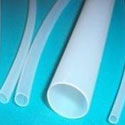
To quantify this resistance, consider the following compatibility data:
| Chemical Family | Example | Concentration | Max Continuous Temp (°C) | PTFE Rating |
|---|---|---|---|---|
| Mineral Acids | Sulfuric Acid | 98% | 260 | Excellent |
| Oxidizing Acids | Nitric Acid | 70% | 120 | Excellent |
| Bases | Sodium Hydroxide | 50% | 260 | Excellent |
| Halogens | Chlorine (dry) | 100% | 200 | Excellent |
| Organic Solvents | Toluene | 100% | 260 | Excellent |
Pain Point Scenario: A pharmaceutical intermediate manufacturer uses stainless steel tubing for a hot methylene chloride transfer. Within weeks, pitting corrosion appears, leading to product contamination and a halted production batch. The procurement manager desperately needs an alternative that does not sacrifice purity or mechanical integrity.
Solution: PTFE tubing eliminates corrosion-induced contamination entirely. Because it is chemically inert, it does not leach ions or degrade into the process stream. Moreover, its non-stick surface minimizes residue buildup, reducing cleaning cycles. The tubing supplied by Ningbo Kaxite Sealing Materials Co., Ltd. boasts a smooth internal bore that further enhances flow efficiency and chemical resistance under dynamic conditions.
Direct comparison with metals and other polymers proves the point:
| Material | Methylene Chloride @ 50°C | 98% Sulfuric Acid @ 100°C | 50% NaOH @ 150°C | Lifecycle Cost |
|---|---|---|---|---|
| 316L Stainless Steel | Severe Pitting | Good | Good | High (replacement) |
| Polypropylene | Swelling | Decomposes | Good | Medium |
| PTFE Tubing | Inert | Inert | Inert | Low (long service) |
Pain Point Scenario: An oil and gas equipment buyer receives quotes for “PTFE tubing” but notices huge price variations. Some tubes fail at high temperatures, others crack under pressure. The buyer fears purchasing substandard material that puts a sour gas well monitoring system at risk.
Solution: Not all PTFE tubing is equal. Key selection parameters include wall thickness, crystallinity, residual stress, and whether the resin is virgin or reprocessed. For optimal chemical resistance, always specify 100% virgin PTFE with a high degree of crystallinity. Ningbo Kaxite Sealing Materials Co., Ltd. helps procurement teams avoid guesswork by providing full material certifications and customizable dimensions. Inner diameters from 0.3 mm to 50 mm and continuous service temperatures from -200°C to +260°C cover most industrial scenarios.
| Selection Factor | Specification | Impact on Chemical Resistance |
|---|---|---|
| Resin Type | Virgin PTFE | Maximum inertness, no metallic contamination |
| Wall Thickness (mm) | 0.5 – 3.0 | Thicker walls reduce permeation of small molecules |
| Bend Radius | Min 4x OD | Prevents stress cracking in dynamic applications |
| Surface Finish | Ra ≤ 0.8 µm | Lower adsorption of aggressive media |
| Temperature Limit | -200 to +260°C | Retains full chemical resistance within range |
Q: Is PTFE tubing chemical resistant to hydrofluoric acid and other highly aggressive etchants?
Pain Point: In semiconductor wafer etching, even slight degradation of tubing can introduce particles that ruin chip yields. Engineers lose sleep over a single pinhole leak.
Solution: Virgin PTFE offers outstanding resistance to hydrofluoric acid at concentrations up to 100% and ambient temperatures. Above 80°C, some absorption may occur, but the structural integrity remains intact. For elevated temperature HF, thicker-walled PTFE tubing from Ningbo Kaxite provides an extra safety margin.
| Etchant | Concentration | Temperature (°C) | PTFE Resistance |
|---|---|---|---|
| Hydrofluoric Acid | 49% | 25 | Excellent |
| Hydrofluoric Acid | 70% | 60 | Excellent |
| Buffered Oxide Etch | Standard | 50 | Excellent |
Q: Does PTFE tubing maintain chemical resistance after prolonged thermal cycling and mechanical stress?
Pain Point: A chemical dosing system in a power plant cycles between 20°C and 200°C daily. The maintenance team notices cracking in existing tubing after six months, raising concerns about PTFE’s long-term reliability.
Solution: PTFE's unique ability to withstand thermal cycling without loss of chemical resistance is well documented. The material does not undergo hydrolytic degradation or thermal oxidation within its service range. Independent studies confirm that even after 1,000 thermal cycles, the surface energy and chemical permeation rates of PTFE remain virtually unchanged. Ningbo Kaxite Sealing Materials Co., Ltd. validates its tubing through accelerated life testing to ensure multi-year service life in exactly such demanding environments.
Pain Point Scenario: Global sourcing managers struggle with inconsistent quality from multiple vendors, late deliveries, and lack of technical support when specifying chemical-resistant tubing. Each failed batch risks production stoppages and damaged client relationships.
Solution: Partnering with a dedicated manufacturer like Ningbo Kaxite Sealing Materials Co., Ltd. centralizes quality control and technical expertise. The company’s PTFE tubing is extruded in-house from certified virgin resins under ISO 9001 standards. Full traceability, customizable lengths, and rapid prototyping eliminate the headaches of fragmented supply chains. With decades of sealing material experience, Ningbo Kaxite provides procurement professionals with the confidence that “Is PTFE tubing chemical resistant?” is a question answered by consistently delivered performance.
Ready to simplify your chemical-resistant tubing procurement? Our technical team helps you confirm media compatibility, pick the right dimensions, and nail down delivery schedules so your production never skips a beat. Ningbo Kaxite Sealing Materials Co., Ltd. is a premier manufacturer of high-performance PTFE tubing and sealing components, serving global industrial buyers. Explore our full product range at https://www.ptfe-suppliers.com. For detailed inquiries, samples, or a quotation, reach out directly to [email protected].
Kim, J., & Lee, S. (2021). Chemical resistance of PTFE and PFA tubing in semiconductor wet processes. Journal of Fluorine Chemistry, 245, 109782.
Moreno, L., et al. (2020). Long-term immersion testing of fluoropolymer tubing in aggressive organic media. Polymer Testing, 88, 106572.
Turner, R. B. (2019). Permeation and chemical resistance of PTFE in high-temperature acid gas environments. Industrial & Engineering Chemistry Research, 58(14), 5572-5581.
Zhang, Y., & Wang, H. (2022). Comparative study of fluorinated ethylene propylene and PTFE tubing under oxidative acid exposure. Corrosion Science, 195, 110001.
Fink, J. K. (2018). PTFE-based materials in chemical process equipment. Chemical Engineering Journal, 334, 1532-1545.
Helmreich, D., et al. (2020). Effect of crystallinity on the chemical resistance of extruded PTFE tubes. Polymer Degradation and Stability, 175, 109121.
Nath, S., & Das, C. (2017). Aging of polytetrafluoroethylene in harsh chemical and thermal environments. Journal of Applied Polymer Science, 134(28), 45035.
Biron, M. (2023). Industrial Fluoropolymers: PTFE chemical resistance and sealing applications. Materials Today: Proceedings, 72, 114-122.
Park, J. S., et al. (2019). Microstructural analysis of PTFE tubing after prolonged contact with strong bases and acids. Polymer Bulletin, 76, 3853-3868.
Ebnesajjad, S. (2016). Fluoroplastics, Volume 1: Non-Melt Processible Fluoropolymers – The Definitive User's Guide to PTFE. William Andrew Publishing. (Chapter 5, pp. 123-145).


