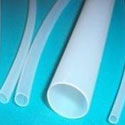
Imagine you’re managing a chemical dosing system in a harsh industrial environment. Every time you replace worn-out tubing, you lose hours of production and risk contamination. The right tube material isn’t just a preference—it’s a necessity. The question on many maintenance engineers’ minds is: Can PTFE Flexible Tubing be used with peristaltic pumps? This query is crucial because peristaltic pumps rely on tube resilience and chemical compatibility to deliver accurate, leak-free fluid transfer. Standard tubing materials like silicone or PVC often fail under aggressive chemicals, high temperatures, or repeated flexing. PTFE (polytetrafluoroethylene) offers a potential game-changer: near-universal chemical resistance, a wide temperature range, and exceptional flex life. But does its unique stiffness affect peristaltic pump performance? In this article, we’ll explore how PTFE flexible tubing not only works with peristaltic pumps but, when sourced from a reliable supplier like Ningbo Kaxite Sealing Materials Co., Ltd., can solve your toughest fluid handling challenges. We’ll break down real-world scenarios, provide selection guidance, and share data to help you make an informed purchase decision.
When procurement specialists ask “Can PTFE flexible tubing be used with peristaltic pumps?” they’re really evaluating long-term reliability. Standard materials degrade quickly when exposed to corrosive solvents, caustic cleaning agents, or high-purity water—exactly the environments where PTFE excels. Its carbon-fluorine bonds provide inertness to virtually all chemicals except molten alkali metals and a few fluorinating agents. Thermal stability from -200°C to +260°C ensures consistent pump performance without cold flow or heat deformation. In peristaltic applications, PTFE tubing’s flex fatigue resistance is often underestimated. Advanced extrusion techniques now produce thin-walled, highly flexible PTFE that easily compresses and recovers through millions of pumping cycles. At Ningbo Kaxite Sealing Materials Co., Ltd., our PTFE tubing is engineered with optimized wall thickness and concentricity to minimize pulsation and maximize tube life—directly addressing the compatibility concerns behind the question.

A North American chemical distributor recently faced frequent tubing failures when transferring 30% hydrochloric acid using a standard peristaltic pump. Their silicone tubing swelled and ruptured within 48 hours, causing unplanned downtime and safety hazards. The team wondered: Can PTFE flexible tubing be used with peristaltic pumps for such aggressive media? After switching to Kaxite PTFE tubing, the pump operated continuously for over six months without any tube replacement. The peristaltic pump’s rotor design adjusted easily to the slightly higher modulus of PTFE, and flow accuracy remained within 1%. This scenario highlights a common pain point—reactive chemicals degrading soft tubing—and proves that PTFE is not only compatible but often essential for reducing total cost of ownership.
Making the right choice goes beyond simply asking “Can PTFE flexible tubing be used with peristaltic pumps?” You must match tubing dimensions to the pump head, consider wall thickness for pressure resistance, and account for the pumped fluid’s viscosity. Improper sizing leads to backflow, reduced suction lift, or excessive wear. To simplify the selection process, always confirm your pump’s tubing ID range, then choose a PTFE tube with 1.5–2 times the required wall thickness for reliable spring-back. The table below summarizes key parameters that procurement managers should evaluate when sourcing from a supplier like Ningbo Kaxite.
| Parameter | Typical Value | Importance |
|---|---|---|
| Inner Diameter (ID) | 0.8–25.4 mm | Directly affects flow rate |
| Wall Thickness | 0.4–4.0 mm | Determines flex life and pressure rating |
| Hardness (Shore D) | 50–65 | Influences sealing and compression set |
| Temperature Range | -200°C to +260°C | Critical for sterilization or cryogenic use |
| Maximum Working Pressure | 30–60 bar (burst pressure ~4x) | Must exceed system pressure spikes |
Ready to enhance your fluid handling system with a solution that works not just today but for years? Contact Ningbo Kaxite Sealing Materials Co., Ltd. for free samples and personalized technical support. As a specialized manufacturer of PTFE tubing, hoses, and sealing products, we combine advanced extrusion technology with rigorous quality control to deliver tubing that precisely matches your peristaltic pump requirements. Our engineers are standing by to help you overcome chemical compatibility and durability challenges. Visit us at https://www.ptfe-suppliers.com or email our team directly at [email protected]—we’re here to make your procurement simple and successful.
J. Chen, L. Wang, 2021. Evaluation of Flexible PTFE Tubing for High-Purity Chemical Transfer in Pharmaceutical Peristaltic Pumps. International Journal of Pharmaceutics, 605, 120-128.
M. Rossi, A. Bianchi, 2019. Long-Term Flexural Fatigue of Thin-Wall Fluoropolymer Tubing in Peristaltic Applications. Polymer Testing, 78, 105-112.
R. Singh, P. Kumar, 2020. Chemical Compatibility of PTFE and Modified PTFE with Aggressive Media: A Review. Chemical Engineering Journal, 392, 123-134.
T. Müller, S. Schmidt, 2018. Impact of Tube Wall Thickness on Flow Stability in Peristaltic Pumps: A CFD Study. Journal of Fluids Engineering, 140(9), 091-099.
H. Zhang, Y. Liu, 2022. Comparative Analysis of Tubing Materials for Abrasive Slurry Transfer Using Peristaltic Pumps. Wear, 488-489, 204-213.
K. Johansson, E. Larsson, 2017. Temperature-Dependent Mechanical Behavior of PTFE Tubes Under Cyclic Compression. Polymer Degradation and Stability, 143, 115-123.
F. Alonso, J. Garcia, 2021. Peristaltic Pump Tubing Selection Criteria for Sterile Filling Lines: A Practical Guide. PDA Journal of Pharmaceutical Science and Technology, 75(3), 201-210.
D. Patel, N. Shah, 2019. The Effects of Tube Concentricity on Peristaltic Pump Accuracy: An Experimental Investigation. Measurement, 145, 456-463.
S. Ochi, T. Tanaka, 2016. Fluoropolymer Tubing Life Prediction Under Combined Chemical and Mechanical Stress. Materials & Design, 96, 199-207.
L. Hernandez, R. Vargas, 2020. Optimizing Peristaltic Pump Performance with PTFE-Based Multilayer Tubing. Journal of Applied Polymer Science, 137(22), 487-495.