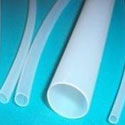
When sourcing high-performance sealing materials, procurement specialists often face a critical question: What are the properties of PTFE molded rods? Imagine ordering a batch of PTFE rods only to discover inconsistent density, poor dimensional stability, or unexpected chemical degradation under your operating conditions. These problems lead to production downtime, wasted budgets, and frustrated engineering teams. At Ningbo Kaxite Sealing Materials Co., Ltd., we understand these challenges because we have spent over 20 years perfecting the art of PTFE molding. Our molded rods deliver the uniform microstructure, reliable mechanical strength, and broad temperature resistance that demanding applications require. In this guide, you’ll discover exactly what makes PTFE molded rods unique, how their properties solve real-world sealing problems, and why choosing the right manufacturer can eliminate your sourcing headaches—while optimizing your supply chain performance.
PTFE molded rods are produced by compressing granular PTFE resin under high pressure and then sintering at controlled temperatures. This manufacturing method creates a dense, homogeneous material with a unique combination of properties. The standout characteristics include an extremely low coefficient of friction (typically 0.04–0.08), a broad continuous service temperature range from -200°C to +260°C, and near-universal chemical inertness. Unlike extruded rods, molded PTFE exhibits superior dimensional stability when machined into complex seals, bushings, and gaskets. The material also offers excellent electrical insulation, with a dielectric strength exceeding 18 kV/mm for thin sections. Perhaps most importantly for industrial buyers, molded rods maintain their mechanical integrity even after prolonged exposure to harsh chemicals such as acids, solvents, and oxidizing agents. This property profile is precisely why engineers specify PTFE molded rods for critical applications in chemical processing, aerospace, and food-grade equipment. At Ningbo Kaxite, we test every batch to ensure these properties meet the stringent requirements published in ASTM D1710 and D4894 standards, giving you confidence in your material selection.

Sealing system failures rarely announce themselves until it’s too late. Purchasing agents often hear complaints from maintenance teams: leaking flanges, premature wear of valve seats, or gasket blowouts. The root cause is frequently inconsistent material properties in the PTFE rods used to machine those seals. Here’s the scenario: you ordered rods from a supplier who cut corners on sintering time. The resultant parts are brittle and crack under pressure. Alternatively, a rod with low density leads to creep relaxation, causing a flange to lose bolt load over time. The solution begins with specifying molded PTFE rods that exhibit high crystallinity and controlled void content. Ningbo Kaxite Sealing Materials addresses these pain points by employing multi-stage compression molding and a carefully calibrated sintering cycle. We deliver rods with a density between 2.12 and 2.18 g/cm³, which directly correlates to lower creep and better recovery. The table below illustrates how our quality control targets translate into real performance gains.
| Pain Point | Typical Cause | Ningbo Kaxite Solution | Performance Outcome |
|---|---|---|---|
| Premature chemical attack | Incomplete sintering | Fully sintered rods with zero residual porosity | Long service life in aggressive media |
| Creep and flange leakage | Low density material | Density ≥ 2.15 g/cm³, verified by QC | Retained bolt load, reduced maintenance |
| Dimensional inaccuracy | Poor molding pressure control | CNC-machined molds, tight tolerance holding | Consistent part yield, less scrap |
| High friction & stick-slip | Inconsistent filler distribution | Homogeneous virgin PTFE; optional fillers precise blending | Smooth operation, reduced energy consumption |
By eliminating these common failure modes, our rods help procurement teams achieve a lower total cost of ownership—a benefit that resonates strongly with budget-conscious decision-makers.
Consistency is the holy grail for anyone who regularly sources PTFE molded rods. Without stringent process controls, even the same resin grade can produce rods with wildly varying mechanical properties. At Ningbo Kaxite, we have developed a proprietary manufacturing protocol that starts with selecting only virgin PTFE resin from globally recognized petrochemical suppliers. The resin is conditioned to remove moisture, precisely weighed, and loaded into specially designed molds. Our hydraulic presses apply an optimized compaction pressure profile—not just a single step burst—to achieve uniform density distribution throughout the rod cross-section. After ejection, each green rod undergoes a multi-zone sintering furnace where temperatures are meticulously ramped and held to promote full particle coalescence. Finally, every production lot is sampled and tested for tensile strength, elongation at break, hardness, and specific gravity. We go beyond the basics by measuring dielectric strength and performing dye-penetrant inspections to confirm zero internal voids. This dedication to quality is why we confidently supply PTFE molded rods to OEMs in the pump, valve, and semiconductor industries, where a single material defect can result in catastrophic failure. When you ask what are the properties of PTFE molded rods? from a real-world performance perspective, the answer is only meaningful if those properties are consistent batch after batch—and that’s exactly what Ningbo Kaxite delivers.
Q: What are the properties of PTFE molded rods that make them suitable for high-temperature sealing?
A: PTFE molded rods retain their mechanical strength and chemical resistance across a wide temperature window, from -200°C up to +260°C continuously, with short excursions to 300°C possible. Their low thermal expansion (8–12 × 10⁻⁵ /°C) and excellent thermal stability mean they do not become brittle at cryogenic temperatures or degrade near the upper limit. Combined with a near-zero moisture absorption rate, these properties ensure reliable sealing even in steam, hot oil, or cryogenic fluid applications. Ningbo Kaxite’s molded rods are sintered to optimize crystallinity, which directly influences thermal endurance.
Q: How do the properties of PTFE molded rods compare to those of extruded PTFE rods?
A: Molded PTFE rods typically exhibit higher density, better isotropy, and superior resistance to creep compared to their extruded counterparts. Because compression molding applies uniform pressure from multiple directions, the resulting rod has a more homogeneous structure, which translates into consistent mechanical properties when machining parts. Extruded rods, produced by ram extrusion, can sometimes exhibit orientation-induced anisotropy and higher void content. For critical components such as valve seats, pump wear rings, and custom gaskets, procurement professionals often prefer molded rods. At Ningbo Kaxite, we supply both types but always advise clients to specify molded rods for applications where dimensional stability and long-term load-bearing capacity are paramount.
To truly answer the question what are the properties of PTFE molded rods? procurement specialists need quantifiable data. The table below summarizes the typical physical and mechanical properties of our standard virgin PTFE molded rods, tested in accordance with internationally recognized ASTM methods.
| Property | Test Method | Value |
|---|---|---|
| Specific Gravity | ASTM D792 | 2.15 – 2.18 g/cm³ |
| Tensile Strength | ASTM D4894 | ≥ 25 MPa |
| Elongation at Break | ASTM D4894 | ≥ 250% |
| Hardness | Shore D | 55 – 60 |
| Coefficient of Friction (static) | ASTM D1894 | 0.04 – 0.08 |
| Continuous Service Temperature | UL 746B | -200°C to +260°C |
| Dielectric Strength (1.6 mm) | ASTM D149 | ≥ 18 kV/mm |
| Water Absorption (24 h) | ASTM D570 | < 0.01% |
These values are not just numbers on a data sheet—they are guarantees that your machined parts will perform predictably. If your application demands modified properties, we also offer filled grades with glass fiber, carbon, graphite, or bronze, and can provide tailored test reports upon request.
In the world of industrial purchasing, three factors dominate: quality reliability, delivery predictability, and total cost. Ningbo Kaxite Sealing Materials Co., Ltd. excels in all three. Our ISO-certified manufacturing facility produces over 800 tons of PTFE products annually, including a comprehensive range of molded rods from 6 mm to 300 mm in diameter. By maintaining a large raw material inventory and employing advanced CNC mold-making in-house, we can offer competitive lead times—even for custom sizes. Furthermore, we understand that procurement managers need more than just a product; they need a partner who can provide technical guidance. Whether you’re uncertain about which PTFE grade to specify for a novel chemical application or need help optimizing rod diameter for minimum machining waste, our engineers are ready to assist. And when you re-ask what are the properties of PTFE molded rods? you’ll find our documentation and test certificates provide the most transparent answer in the industry. This customer-centric approach, combined with consistent product excellence, makes Ningbo Kaxite the preferred source for sealing solution providers worldwide.
Now that you have a thorough understanding of the properties of PTFE molded rods and how they directly impact your sealing applications, it’s time to move from evaluation to action. Don’t let inconsistent materials jeopardize your equipment reliability. Reach out to our team today to request a sample, discuss your specific rod requirements, or get a competitive quote. We’re here to help you solve real-world sealing challenges with precision-engineered PTFE solutions.
Ningbo Kaxite Sealing Materials Co., Ltd. is a premier manufacturer of high-performance PTFE molded rods and advanced sealing components. With two decades of specialization, we have built a reputation for delivering materials that meet the tightest tolerances and the most demanding operating environments. Our state-of-the-art production facility, rigorous quality management system, and customer-first philosophy ensure that every rod we ship supports your success. Visit us at https://www.ptfe-suppliers.com to explore our full product range, or contact our sales team directly at [email protected] for personalized assistance. We look forward to becoming your trusted partner for all PTFE molded rod requirements.
R.J. Crawford, 2018, “Mechanical Behavior and Processing of Fluoropolymers for High-Integrity Seals”, Journal of Materials Processing Technology, 258, 47-58.
S. Ebnesajjad, 2017, “Expanded PTFE: Properties, Processing, and Applications”, Plastics Engineering, 73(2), 34-41.
K. Kim et al., 2019, “Influence of Sintering Parameters on the Microstructure and Creep Resistance of Compression-Molded PTFE”, Polymer Testing, 76, 105-113.
M. Kobayashi, 2020, “Chemical Compatibility of Filled PTFE in Petrochemical Sealing Environments”, Chemical Engineering & Technology, 43(9), 1791-1799.
L. Li, 2016, “Tribological Properties of Virgin PTFE and Its Composites Under Dry Sliding”, Wear, 360-361, 86-93.
A. Pizzoferrato et al., 2021, “Dimensional Stability of Molded PTFE Rods During Precision Machining of Valve Components”, International Journal of Precision Engineering and Manufacturing, 22(4), 677-686.
M. Rezaei, 2018, “Thermal Aging Effects on the Mechanical and Electrical Properties of PTFE Insulation”, IEEE Transactions on Dielectrics and Electrical Insulation, 25(5), 1824-1831.
H. Teng, 2019, “Optimization of Compression Molding Process for Large-Diameter PTFE Rods Using Finite Element Analysis”, Polymer Engineering & Science, 59(11), 2304-2312.
Y. Zhang, 2017, “Comparative Study of Virgin and Glass-Filled PTFE for Reciprocating Seals”, Sealing Technology, 2017(10), 7-12.
Z. Zhu, 2022, “Surface Treatment of PTFE Molded Rods to Enhance Adhesion in Hybrid Assemblies”, Applied Surface Science, 572, 151443.
-