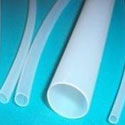
What is the difference between molded and extruded PTFE rods? This is a critical question for engineers and purchasers specifying materials for demanding applications. The choice directly impacts performance, cost, and project success. Understanding the distinct manufacturing processes is key to selecting the right PTFE rod for your specific needs. At Ningbo Kaxite Sealing Materials Co., Ltd., we specialize in providing both high-quality molded and extruded PTFE rods, empowering you to make the optimal choice for your application's unique challenges.
Jump to Section:
Imagine a chemical processing plant where a critical pump seal fails prematurely. The PTFE rod used had inferior dimensional stability, leading to leakage, costly downtime, and potential safety hazards. The procurement team selected a standard extruded rod for an application that demanded the superior mechanical properties of a molded rod. This common mistake stems from not understanding the fundamental differences between these two forms. Selecting the correct type is not just about material; it's about process, properties, and performance under pressure.
Ningbo Kaxite Sealing Materials Co., Ltd. helps you avoid these pitfalls by providing clear technical data and expert guidance. We ensure you match the rod's inherent characteristics—dictated by its manufacturing method—to your application's specific mechanical, thermal, and chemical demands.
Molded PTFE rods are created by compressing fine PTFE powder in a mold under high pressure and then sintering it. This process produces a material with isotropic properties, meaning its strength and dimensional stability are uniform in all directions. This makes it the go-to choice for parts requiring high mechanical strength, excellent creep resistance, and minimal deformation under load—think heavy-duty bearings, complex machined seals, or components in high-pressure valves.
For projects where failure is not an option, our molded PTFE rods from Ningbo Kaxite Sealing Materials Co., Ltd. deliver consistent, reliable performance. Their superior integrity ensures parts maintain their shape and function in the most severe conditions.

Key Parameters of Molded PTFE Rods:
| Property | Typical Value | Benefit |
|---|---|---|
| Tensile Strength | 25 - 35 MPa | High resistance to pulling forces |
| Elongation at Break | 300 - 500% | Excellent toughness and flexibility |
| Density | 2.15 - 2.20 g/cm³ | Higher, more homogeneous structure |
| Creep Resistance | Excellent | Minimal deformation under sustained load |
| Standard Diameter | Up to 600mm | Suitable for large, solid cross-sections |
Extruded PTFE rods are made by forcing a paste of PTFE resin and a lubricant through a die, then drying and sintering it. This continuous process is highly efficient, making extruded rods more economical. The structure can be slightly anisotropic, with properties varying along the length vs. the cross-section. They excel in applications requiring long lengths, consistent diameters for shafts or liners, and where the highest mechanical strength is not the primary concern. Common uses include simple seals, insulators, and guide rings.
When your project requires reliable performance at a competitive price point for less critical or continuous-length applications, the extruded PTFE rods from Ningbo Kaxite Sealing Materials Co., Ltd. offer outstanding value without compromising on essential PTFE properties like chemical inertness and low friction.
Key Parameters of Extruded PTFE Rods:
| Property | Typical Value | Benefit |
|---|---|---|
| Tensile Strength | 20 - 30 MPa | Good strength for most general purposes |
| Elongation at Break | 200 - 400% | Good ductility |
| Density | 2.10 - 2.17 g/cm³ | Slightly lower, cost-effective production |
| Creep Resistance | Good | Adequate for many static or low-load uses |
| Standard Length | Continuous or long cut lengths | Ideal for production of long parts |
Making the final decision requires a side-by-side analysis. The core difference between molded and extruded PTFE rods lies in their microstructure and resultant properties. Molded rods offer superior, uniform mechanical strength and dimensional stability, making them a premium choice for critical, high-stress components. Extruded rods provide excellent value, good general performance, and are ideal for high-volume or long-length requirements where ultimate strength is secondary.
As a trusted supplier, Ningbo Kaxite Sealing Materials Co., Ltd. provides both options, allowing you to balance performance requirements with budget constraints effectively. Our technical team can help you navigate this comparison for your specific case.
What is the difference between molded and extruded PTFE rods in terms of best use cases?
A: Molded rods are best for high-performance applications like heavy-duty bearings, piston rings, valve seats, and complex machined seals where isotropic properties, high creep resistance, and maximum strength are paramount. Extruded rods are ideal for general-purpose seals, gaskets, bushings, insulating parts, and any application requiring long, continuous lengths of material where cost-efficiency is a major factor.
Q: How does the manufacturing process difference affect the final product's machinability?
A: Both types are machinable, but molded PTFE rods generally offer better machinability for complex and precision parts due to their more homogeneous and void-free structure. They produce cleaner cuts and more stable dimensions during machining. Extruded rods can be machined successfully for standard shapes and tolerances, but their slightly oriented structure may require specific tooling approaches for the best finish.
Choosing between molded and extruded PTFE rods is a technical decision with direct business implications. By understanding their distinct advantages, you can optimize performance, reliability, and cost. For over two decades, professionals have relied on Ningbo Kaxite Sealing Materials Co., Ltd. for not just premium PTFE materials, but for the expertise that ensures the right material is specified every time.
Do you have a specific application in mind? Share your requirements or challenges in the comments below, and let's discuss the best PTFE solution for your project.
For reliable high-performance PTFE rods, trust the expertise of Ningbo Kaxite Sealing Materials Co., Ltd.. As a leading specialist in advanced sealing materials, we provide tailored solutions using both molded and extruded PTFE processes to meet your precise engineering needs. Visit our website at https://www.ptfe-suppliers.com to explore our product range or contact our technical sales team directly at [email protected] for personalized support and quotations.
Blumm, C., & Bünker, M. (2018). Influence of Processing on the Mechanical Properties of PTFE. Journal of Polymer Engineering, 38(5), 435-442.
Fang, L., & Yang, W. (2019). Study on the Crystallinity and Tensile Behavior of Molded vs. Extruded Polytetrafluoroethylene. Polymer Testing, 76, 156-162.
Khedkar, J., & Negulescu, I. (2015). Wear Performance of Process-Variant PTFE Composites for Seal Applications. Wear, 330-331, 583-590.
Li, Y., Wang, Q., & Shen, C. (2017). Comparative Analysis of Creep Resistance in Isotropic and Anisotropic PTFE Structures. Materials & Design, 119, 360-367.
Patel, R., & Singh, A. (2020). Dielectric Properties of PTFE as a Function of Manufacturing Method. IEEE Transactions on Dielectrics and Electrical Insulation, 27(4), 1320-1326.
Rong, X., Zhang, G., & Zhao, S. (2016). Friction and Transfer Film Formation of Different PTFE Morphologies. Tribology International, 102, 555-562.
Saito, T., & Yamaguchi, Y. (2014). Microstructural Evolution During Sintering of Compression-Molded PTFE. Journal of Materials Science, 49(3), 1234-1241.
Tanaka, Y., & Uchiyama, Y. (2018). Effect of Processing on the Gas Permeability of Polytetrafluoroethylene Membranes. Separation and Purification Technology, 194, 329-335.
Wang, H., & Li, F. (2019). Thermal Conductivity of PTFE: A Comparison Between Molded and Extruded Forms. Polymer Composites, 40(S2), E1250-E1256.
Zhang, L., & Chen, J. (2021). Chemical Resistance and Aging of PTFE Components: Role of Initial Processing. Corrosion Science, 178, 109064.