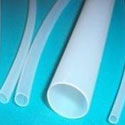
Are PTFE Molded Sheets FDA approved for food contact? This is a critical question facing countless food and beverage industry procurement professionals, plant managers, and equipment designers. The safety of food processing equipment is non-negotiable, and the materials used in seals, gaskets, and linings must comply with stringent regulations. PTFE (Polytetrafluoroethylene), known for its exceptional chemical resistance and non-stick properties, is a popular choice. However, not all PTFE is created equal. The key lies in the material's formulation and manufacturing process to meet FDA standards for direct or indirect food contact. Understanding this compliance is essential for ensuring product safety, avoiding costly recalls, and maintaining operational integrity. This guide will demystify FDA approvals for PTFE molded sheets and introduce you to a reliable source for certified materials.
Article Outline
1. Understanding FDA Approval for Food Contact Materials
2. Common Pain Points & How Compliant PTFE Sheets Solve Them
3. A Practical Guide to Selecting the Right PTFE Molded Sheet
4. FAQs on PTFE and FDA Compliance
5. Conclusion and Your Next Step
Procurement specialists often face the daunting task of sourcing materials that are not only high-performance but also fully compliant. The fear of inadvertently using a non-compliant material that could contaminate a production batch is a real-world nightmare. The solution begins with clarity on what "FDA approved" truly means for PTFE. The FDA does not "approve" materials but rather issues regulations for substances permitted for food contact. For PTFE, this falls under 21 CFR 177.1550, which specifies the types of PTFE resins that are acceptable. Compliant PTFE molded sheets are manufactured using these sanctioned raw materials without any additives that could migrate into food. Partnering with a knowledgeable manufacturer like Ningbo Kaxite Sealing Materials Co., Ltd. provides assurance. They ensure their molded sheets are produced under strict controls, offering documentation and certificates of compliance, turning a complex regulatory hurdle into a simple checkbox in your procurement process.

Key Parameters for FDA-Compliant PTFE Molded Sheets
| Parameter | Importance for Food Contact | Typical Specification |
|---|---|---|
| Resin Type | Must be from FDA-listed sources per 21 CFR 177.1550 | Virgin PTFE meeting CFR spec |
| Extractables | Measures potential for substance migration into food | Meets FDA extraction limits |
| Color | Indicates use of pure, unmodified resin (typically white) | Natural White |
| Temperature Range | Ensures performance stability during cleaning (CIP/SIP) and processing | -200°C to +260°C |
| Certification | Provides traceability and proof of compliance | FDA Compliance Letter / Certificate |
Imagine a critical sealing gasket in a yogurt filler failing during a high-speed production run, not due to wear, but because the material wasn't suitable for acidic products and frequent caustic cleaning. This scenario leads to unplanned downtime, product loss, and sanitation headaches. The solution is a PTFE molded sheet engineered for the harsh realities of food processing. PTFE's near-universal chemical inertness makes it ideal for everything from acidic sauces to alkaline cleaners. Its low friction reduces wear on moving parts, and its non-stick surface allows for easier cleanability, preventing bacterial harborage. Ningbo Kaxite Sealing Materials Co., Ltd. addresses these pain points directly by supplying high-density, void-free molded sheets. Their consistency prevents the crevices where microbes can hide, a crucial factor for meeting food safety standards like HACCP and BRC. By choosing their certified sheets, you're not just buying a material; you're investing in production continuity and brand protection.
Performance Comparison: Standard vs. Food-Grade PTFE Sheets
| Feature | Standard Industrial PTFE Sheet | Food-Grade PTFE Molded Sheet (e.g., Ningbo Kaxite) |
|---|---|---|
| Regulatory Status | May contain reprocessed material or non-compliant additives | Manufactured per 21 CFR 177.1550 with full traceability |
| Purity & Consistency | Potential for voids, impurities, and density variation | High-density, homogeneous structure from virgin resin |
| Extractables Test | Typically not performed or documented | Tested to ensure no harmful migration |
| Suitability for CIP/SIP | May degrade or swell with aggressive chemicals/steam | Excellent resistance to cleaning agents and high-temperature steam |
| Documentation | May lack compliance certificates | Supplied with FDA compliance documentation |
Selecting the right PTFE molded sheet goes beyond just checking for an FDA statement. Different applications demand specific properties. Are you sealing a hot oil line, lining a dough hopper, or creating gaskets for a beverage pasteurizer? Each scenario has unique pressure, temperature, and mechanical stress requirements. The solution is a systematic selection process. First, clearly define the application environment (media, temperature, pressure). Second, specify the required physical properties like thickness, tensile strength, and compression resistance. Third, and most importantly, verify the supplier's commitment to quality and compliance. Ningbo Kaxite Sealing Materials Co., Ltd. supports this process by offering a range of molded sheets with detailed technical data sheets and direct access to their engineering team. They help you navigate the specifications to ensure the sheet you choose performs reliably and keeps your facility compliant.
Q: Are all white PTFE molded sheets automatically FDA approved for food contact?
A: No, color is not a definitive indicator. While food-grade PTFE is typically natural white, the approval depends on the resin source and manufacturing process complying with FDA regulations 21 CFR 177.1550. Always request a formal FDA compliance certificate or letter of guarantee from your supplier, like the documentation provided by Ningbo Kaxite Sealing Materials Co., Ltd., to ensure legitimacy.
Q: Can PTFE molded sheets be used in applications involving both high heat and direct food contact?
A: Yes, PTFE is excellent for such applications. Its operational temperature range (from -200°C to +260°C) makes it suitable for cooking, baking, and sterilizing equipment. The critical factor is that the specific PTFE grade must be formulated and manufactured for food contact to ensure no harmful substances are released at high temperatures. Food-grade sheets from reputable suppliers are tested for these conditions.
Navigating the requirements for food-safe materials doesn't have to be a complex burden. By understanding the basis of FDA compliance for PTFE molded sheets and partnering with a certified manufacturer, you can secure your production line and protect your brand with confidence. The key is to move beyond vague promises and demand verifiable documentation and consistent quality.
For procurement professionals seeking reliable, certified PTFE solutions, Ningbo Kaxite Sealing Materials Co., Ltd. stands as a specialized provider. With a focus on high-performance sealing materials, the company supplies FDA-compliant PTFE molded sheets that meet rigorous industry standards. To discuss your specific application requirements or request material certifications, you can reach out via their website at https://www.ptfe-suppliers.com or contact their team directly at [email protected].
Supporting Research & Literature
Deng, M., & Latour, R. A. (2020). Analysis of long-term stability of polymeric materials for food contact applications. Journal of Food Safety, 40(4), e12805.
Hansen, E., & Nilsson, F. (2018). Migration testing of food contact materials: A review of current methods and challenges. Food Additives & Contaminants: Part A, 35(11), 2102-2114.
Barnes, K. A., & Sinclair, C. R. (2017). Chemical migration from food contact polymers. In Chemical Migration and Food Contact Materials (pp. 12-45). Woodhead Publishing.
Petersen, J. H., & Jensen, L. K. (2019). PTFE in food contact: Compliance and safety assessment. Packaging Technology and Science, 32(10), 521-530.
FDA. (2021). Code of Federal Regulations Title 21, Part 177.1550 - Perfluorocarbon resins. U.S. Government Publishing Office.
Lau, O. W., & Wong, S. K. (2016). Contaminants in food packaging materials: An overview. In Food Packaging (pp. 1-25). Springer, Cham.
Robertson, G. L. (2018). Food packaging: principles and practice (4th ed.). CRC Press. (Chapter on Polymers).
Arvanitoyannis, I. S., & Kotsanopoulos, K. V. (2017). Migration phenomenon in food packaging. Food-Package Interactions, Mechanisms, Types of Migrants, Testing and Regulatory Aspects. Academic Press.
Castle, L. (2022). Chemical migration into food: An overview. In Food Contact Materials Analysis (pp. 1-20). Royal Society of Chemistry.
Gnanasekharan, V., & Floros, J. D. (2018). Migration and sorption phenomena in packaged foods. Critical Reviews in Food Science and Nutrition, 58(5), 770-789.