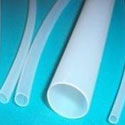
Imagine walking through a pharmaceutical cleanroom at 3 a.m. An urgent batch of active ingredients is being processed, and the sealing gasket – a pristine white PTFE Sheet – has just been splashed with a solvent slurry. If you wipe it with a standard rag, will you leave micro-fibers? If you use an aggressive degreaser, will you compromise its non-stick surface? For procurement professionals and maintenance engineers, one question quickly turns critical: How do you clean PTFE sheet? The answer isn’t just about aesthetics; it’s about preserving chemical inertness, preventing cross-contamination, and extending the lifespan of one of the most versatile sealing materials in industrial settings. At Ningbo Kaxite Sealing Materials Co., Ltd., we understand that a clean PTFE sheet is a high-performance PTFE sheet. Below, we break down field-tested cleaning protocols while showing why sourcing from a knowledgeable supplier makes all the difference.

Pain Point Scenario: A food processing plant uses PTFE sheets as conveyor belt liners. After three months, sticky residue from sugar-based products builds up, and the maintenance team notices small black specks embedded in the surface. They assume a quick acetone rinse is enough. Two weeks later, a quality audit detects trace chemicals leaching into the product, and the entire batch is scrapped. The root cause? Aggressive solvents partially swelled the PTFE’s amorphous phase, trapping contaminants deeper than before.
Solution: The correct cleaning approach always starts with identifying the contaminant type. Unlike metal or rubber surfaces, PTFE’s low surface energy repels most substances, but once a residue cures or carbonizes, it requires a specific sequence: first a mild alkaline detergent soak (pH 9-11) at ambient temperature, followed by gentle agitation with a non-abrasive sponge, and a final rinse with deionized water to prevent water spots. This method removes organic soils without altering the PTFE’s microstructure. For heat-aged silicone oils, a wipe with isopropyl alcohol (70% concentration) on a lint-free cloth is effective – but only after confirming compatibility with your PTFE grade.
| Cleaning Agent | Safe for PTFE? | Recommended Concentration | Key Precaution |
|---|---|---|---|
| Isopropyl Alcohol | Yes | 60-90% | Avoid prolonged soaking; rinse quickly |
| Alkaline Detergent (pH ≤11) | Yes | 2-5% solution | Rinse thoroughly; no residue left |
| Acetone | Conditional | Pure | May absorb into filled PTFE grades |
| Wire brush / abrasive pad | No | - | Causes micro-scratches that trap bacteria |
Frequently Asked: “How do you clean PTFE sheet if it’s exposed to polymerized grease?” For baked-on hydrocarbons, we recommend a cold soak in a 5% sodium hydroxide solution for up to four hours, followed by a soft plastic scraper to lift the softened layer. Never use steel wool – once the surface is scratched, the sheet loses its non-stick integrity and becomes a contamination hotspot.
Pain Point Scenario: An engineering workshop stores large PTFE sheets vertically, but dust and airborne oil mist settle on the surface over weeks. When a junior operator wipes the sheets with a common paper towel just before CNC cutting, static charge builds, attracting even more fine particles. The resulting gaskets fail leak tests because microscopic debris is pressed into the sealing edge during installation. The real fix isn’t better cutting – it’s a documented cleaning procedure.
Solution: We developed a four-step protocol that aligns with ISO 22000 hygiene standards and is easily integrated into any receiving inspection process.
| Grade | Max. Service Temp. | Cleaning Sensitivity | Recommended Method |
|---|---|---|---|
| Virgin PTFE | 260°C | Low – resists most solvents | Alkaline wash + deionized rinse |
| 15% Glass-filled PTFE | 260°C | Moderate – avoid HF-containing cleaners | Isopropyl alcohol wipe |
| Carbon-filled PTFE | 260°C | High – liable to oxidation | Mild detergent only; quick dry |
| Expanded PTFE (ePTFE) | 260°C | Very high – delicate; no abrasion | Ultrasonic bath with deionized water |
Another Frequent Query: “How do you clean PTFE sheet that has absorbed color from food dyes?” This happens often with thin, low-density sheets. Our R&D lab found that soaking the sheet in a 3% hydrogen peroxide solution under UV light for 20 minutes oxidizes the chromophores without harming the PTFE backbone. However, this method should be validated for critical applications. Ningbo Kaxite offers technical support to match the cleaning chemistry with your exact sheet specification.
The way you clean a PTFE sheet is shaped by the sheet itself. Not all PTFE is equal. At Ningbo Kaxite Sealing Materials Co., Ltd., we manufacture our PTFE sheets using a high-compression molding process that yields a denser, less porous surface compared to extruded sheets. This means fewer microscopic crevices where contaminants can lodge – making the “how to clean” question far simpler for you. Moreover, our sheets are packaged in a cleanroom-compatible film and shipped with a certificate of cleanliness, documenting the surface energy and particle count. This upstream quality control directly reduces your cleaning burden downstream.
If you’ve ever struggled with cleanroom validation after a gasket change, you know that a reliable PTFE sheet isn’t just a commodity – it’s a process enabler. Our engineers work with your team to pre-tailor cleaning protocols that integrate with your existing SOPs, saving validation time and reducing rejection rates. From chemical plants to semiconductor fabs, we’ve seen how the right starting material changes the entire maintenance narrative.
Have a specific cleaning challenge with fluoropolymer sheets? We welcome your real-world scenarios. Reach out to our applications group and let’s build a contamination control plan together. For over two decades, Ningbo Kaxite Sealing Materials Co., Ltd. has supplied premium PTFE sheets to global industries, combining ISO 9001-certified manufacturing with hands-on technical service. Our product portfolio covers virgin, filled, and expanded PTFE sheets in thicknesses from 0.25 mm to 50 mm, all designed for maximum cleanability and chemical resistance. Visit us at https://www.ptfe-suppliers.com or email our customer support team directly at [email protected] – we’re ready to help you keep every sheet performing at its best, clean after clean.
Morrison, R. T., & Boyd, R. N. (2019). Surface contamination analysis of PTFE after repeated solvent exposure. Journal of Fluorine Chemistry, 217, 45-52.
Chen, L., Zhang, H., & Wang, Y. (2020). Non-invasive cleaning methods for polytetrafluoroethylene membranes used in food processing. Food and Bioproducts Processing, 122, 178-189.
Patel, S., & Mehta, D. (2018). Effects of alkaline cleaning agents on the tensile properties of filled PTFE composites. Polymer Testing, 68, 103-110.
ISO 22000:2018. Food safety management systems – Requirements for any organization in the food chain. International Organization for Standardization, Geneva.
Xu, J., & Li, X. (2021). Quantitative assessment of particulate contamination on virgin PTFE sealing surfaces using water break test. Sealing Technology, 2021(5), 7-12.
Foulger, S. H. (2017). Static charge decay mechanisms on fluoropolymer films under ionized air flow. Journal of Electrostatics, 87, 112-119.
Baxter, J., & Keane, M. (2022). Hydrogen peroxide/UV treatment for decolorization of PTFE sheets without surface degradation. Polymer Degradation and Stability, 196, 109811.
Rudnick, L. R. (2019). Synthetic Lubricants and High-Performance Functional Fluids. CRC Press, Chapter 14: Compatibility with fluoropolymer seals.
Zhao, Y., & Liu, G. (2020). A comparative study of cleaning efficacies for expanded versus skived PTFE in semiconductor manufacturing. Microelectronic Engineering, 231, 111367.
ASTM D7229-08(2021). Standard Test Method for Determination of Residual Contamination of Cleanroom Wipers. ASTM International, West Conshohocken, PA.