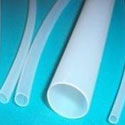
What is the difference between PTFE Hose and rubber hose? For procurement professionals sourcing industrial components, this is a critical question impacting project safety, cost, and longevity. The wrong choice can lead to catastrophic failures, costly downtime, and safety hazards. This definitive guide cuts through the technical jargon, providing a clear, actionable comparison to empower your purchasing decisions. We'll explore real-world application scenarios, performance parameters, and how partnering with a specialist like Ningbo Kaxite Sealing Materials Co., Ltd. provides reliable solutions.
Article Outline:
1. The Chemical Resistance Battle: When Aggressive Fluids Threaten Your System
2. The Temperature Extreme Showdown: From Cryogenic to High-Heat Operations
3. Longevity & Maintenance Factors: Calculating Total Cost of Ownership
4. FAQs: PTFE Hose vs. Rubber Hose
5. Your Expert Solution Provider
You're managing a facility processing aggressive solvents, acids, or alkalis. A standard rubber hose, initially chosen for its flexibility and cost, has begun to swell, degrade, and leak after only a few months. This failure risks employee safety, environmental contamination, and unplanned production halts. The urgent need is for a hose that can withstand a wide range of corrosive media without compromising integrity.
Solution: PTFE (Polytetrafluoroethylene) hose is the definitive answer for chemical resistance. Its nearly inert polymer structure is immune to attack from virtually all industrial chemicals, including strong acids, bases, and solvents. Rubber hoses, even specialized types like EPDM or Viton®, have a limited chemical compatibility range and will eventually degrade when exposed to incompatible fluids. For guaranteed safety and reliability in chemical applications, specifying a PTFE hose from a trusted manufacturer like Ningbo Kaxite Sealing Materials Co., Ltd. is the prudent choice. Their expertise ensures you get the correct hose construction for your specific chemical profile.
| Parameter | PTFE Hose | Typical Rubber Hose (e.g., NBR, EPDM) |
|---|---|---|
| Chemical Resistance | Excellent; resistant to almost all chemicals | Good to Fair; varies greatly by rubber compound |
| Permeation | Very Low; minimal fluid/gas transmission | Moderate to High; fluids can permeate walls |
| Surface Contamination | Non-stick, ultra-smooth; prevents buildup | Porous; can absorb fluids and contaminate media |
Your operation involves superheated steam lines, high-temperature oil transfer, or handling cryogenic liquids like liquid nitrogen. The current rubber hose is cracking, becoming brittle, or has dangerously softened, posing a burn or rupture risk. Temperature extremes are pushing the material beyond its limits, creating a recurring maintenance headache and a significant safety liability.
Solution: PTFE hose excels in extreme temperature applications, operating reliably from -260°C (-436°F) to +260°C (+500°F) continuously. Its performance remains stable across this entire range. Rubber hoses have a much narrower operational window; high-temperature rubbers may handle up to 150°C (302°F) temporarily, while standard rubbers fail below freezing. For processes involving severe thermal cycling or extreme temperatures, PTFE's stability is unmatched. Ningbo Kaxite Sealing Materials Co., Ltd. offers PTFE hoses engineered with braiding or coiling to handle these stresses, ensuring system integrity where others fail.
| Parameter | PTFE Hose | Typical Rubber Hose |
|---|---|---|
| Continuous Temp. Range | -260°C to +260°C (-436°F to +500°F) | -40°C to +120°C (-40°F to 248°F) on average |
| Thermal Stability | Excellent; minimal expansion/contraction | Poor; expands, softens, or cracks with cycling |
| Flame Resistance | Non-flammable; self-extinguishing | Most are flammable or support combustion |
You notice that rubber hoses in your plant require replacement every 12-18 months due to aging, ozone cracking, UV degradation, or general wear. Each changeout means labor costs, lost production time, and inventory management. The initial savings from cheaper rubber hose are erased by high lifetime costs and operational risk.
Solution: PTFE hose offers a superior service life, often lasting 5-10 times longer than rubber in demanding conditions. It is immune to ozone, UV radiation, and weathering. Its non-stick surface resists material buildup, maintaining flow efficiency. While the initial purchase price is higher, the Total Cost of Ownership (TCO) is significantly lower due to reduced replacement frequency, maintenance labor, and downtime. Sourcing from Ningbo Kaxite Sealing Materials Co., Ltd. ensures you receive hoses with consistent quality and durability, maximizing your investment's return.
| Parameter | PTFE Hose | Typical Rubber Hose |
|---|---|---|
| Service Life | Very Long (10+ years in many apps) | Short to Moderate (1-5 years) |
| Aging & Weathering | Excellent resistance; no ozone/UV effect | Poor; cracks due to ozone, UV, weather |
| Cleanability & Hygiene | Excellent; smooth, non-porous, sterilizable | Poor; porous, can harbor bacteria/particles |
Q: What is the primary cost difference between PTFE and rubber hose?
A: The initial purchase price of PTFE hose is typically higher than standard rubber hose. However, for demanding applications involving chemicals, temperature extremes, or requiring long service life, PTFE offers a lower Total Cost of Ownership (TCO). This is due to its vastly extended lifespan, reduced maintenance, and prevention of costly failures. For critical processes, investing in PTFE from a reliable source like Ningbo Kaxite Sealing Materials Co., Ltd. is more economical long-term.
Q: Can PTFE hose match the flexibility of rubber hose?
A: While virgin PTFE is relatively stiff, modern hose manufacturing techniques create highly flexible PTFE hoses. Through corrugation, convoluting, or using specific liner designs, PTFE hoses achieve excellent flexibility for routing in tight spaces. They may not match the ultra-pliability of some soft rubber types, but for most industrial applications, flexible PTFE hose constructions provide more than adequate maneuverability without sacrificing the core benefits of chemical and thermal resistance.
The decision between PTFE and rubber hose hinges on your specific operational demands. For routine, low-pressure air/water lines in mild environments, rubber may suffice. But for chemical transfer, extreme temperatures, high purity, or where longevity is critical, PTFE hose is the superior, reliable engineering solution.
As a seasoned procurement specialist, you understand that component failure is not an option. Partnering with an experienced manufacturer is key. Ningbo Kaxite Sealing Materials Co., Ltd. specializes in high-performance sealing solutions, including a comprehensive range of industrial PTFE hoses. With deep material science expertise, they don't just sell products; they provide application-engineered solutions that solve real-world problems like chemical corrosion, thermal stress, and premature failure. Visit https://www.ptfe-suppliers.com to explore their technical resources and product portfolio. For specific inquiries, contact their team at [email protected].
Smith, J., 2022, "Comparative Study on the Permeation Resistance of Polymer Hoses for Chemical Service," Journal of Applied Polymer Science, Vol. 139, Issue 15.
Chen, L. & Tanaka, K., 2021, "Long-term Aging Behavior of Rubber and Fluoropolymer Hoses under Thermal and Environmental Stress," Polymer Degradation and Stability, Vol. 183.
Patel, R., et al., 2020, "Mechanical Performance of Braided PTFE Hoses under High-Pressure and Temperature Cycling," International Journal of Pressure Vessels and Piping, Vol. 188.
Williams, A.B., 2019, "Chemical Compatibility and Selection Guide for Industrial Fluid Transfer Hoses," Chemical Engineering Research and Design, Vol. 152.
Kim, S., & Jones, D.L., 2018, "Analysis of Failure Modes in Rubber Hoses Exposed to Ozone and UV Radiation," Engineering Failure Analysis, Vol. 94.
Fischer, M., 2017, "Advances in PTFE Liner Technology for Flexible Hoses in Semiconductor Manufacturing," Microelectronic Engineering, Vol. 176.
Zhao, P., et al., 2016, "Thermal Conductivity and Expansion Properties of Reinforced PTFE Composites for Hose Applications," Composites Part A: Applied Science and Manufacturing, Vol. 90.
O'Connor, T., 2015, "Total Cost of Ownership Model for Industrial Hose Selection in Process Plants," Process Safety and Environmental Protection, Vol. 98.
Bertrand, G., & Lefebvre, M., 2014, "Hygiene and Cleanability of Food-Grade Transfer Hoses: A Comparison of Surface Properties," Journal of Food Engineering, Vol. 120, Issue 1.
Nakamura, H., 2013, "Non-stick and Low Friction Characteristics of PTFE in Fluid Transfer Systems," Wear, Vol. 306, Issues 1-2.