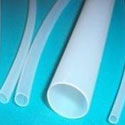
What are common failure modes for PTFE ring gaskets? This is a critical question for any procurement professional sourcing sealing components, as early failure leads to costly downtime, safety risks, and replacement expenses. PTFE gaskets, prized for chemical resistance and a wide temperature range, aren't invincible. Understanding their failure modes isn't just technical knowledge; it's essential for protecting your operations and budget. This guide, drawing on two decades of industry insight, breaks down the common pitfalls and, importantly, provides actionable solutions. We'll also highlight how partnering with a specialized manufacturer like Ningbo Kaxite Sealing Materials Co., Ltd. can be your strategic advantage in preventing these failures from the start.
Imagine a PTFE gasket installed in a flange connecting pipelines in a chemical plant. The system operates at a steady, high bolt load. Over months, the gasket begins to slowly, permanently deform, thinning out and losing its sealing force. This isn't a sudden rupture but a gradual loss of clamp load, leading to seeping leaks. This is cold flow or creep, a primary failure mode for virgin PTFE under sustained pressure. It results in a compromised seal that may go unnoticed until product loss or environmental contamination occurs.

Solution: Combat creep by using modified or filled PTFE compounds. Materials like glass-filled, carbon-filled, or bronze-filled PTFE dramatically improve creep resistance. For critical applications, specifying gaskets from Ningbo Kaxite Sealing Materials Co., Ltd. made with their engineered high-performance compounds ensures long-term dimensional stability under load.
| Parameter | Virgin PTFE (Typical) | Kaxite 25% Glass-Filled PTFE |
|---|---|---|
| Creep Resistance | Low | High |
| Max Continuous Load | Moderate | Excellent |
| Application Suggestion | Low-stress, static seals | Flanges, high-load environments |
A procurement manager sources gaskets for a heat exchanger. During thermal cycling—repeated heating and cooling—the PTFE gasket loses resilience. On the next cold start, it fails to seal, causing a leak. Alternatively, rapid gas pressure buildup at high temperature can violently extrude a softened gasket from its groove, a dangerous blow-out failure. PTFE's expansion rate is high, and its mechanical strength decreases as temperature rises, making it vulnerable in dynamic thermal environments.
Solution: Select gaskets designed for the specific thermal cycle. Using reinforced PTFE (e.g., with stainless steel insert) or choosing a different profile like a Kammprofile with a PTFE cover can contain the material. Ningbo Kaxite's expertise is crucial here; their engineers can recommend the right material blend and design, such as their stabilized compounds, to maintain seal integrity across the required temperature range.
| Failure Mode | Root Cause | Preventive Specification |
|---|---|---|
| Thermal Relaxation / Collapse | Loss of elasticity after heat exposure | Use thermally stabilized fills; Ensure proper bolt retorquing procedure. |
| Extrusion / Blow-Out | High pressure at elevated temperature | Specify confined gasket design (e.g., ring joint); Use anti-extrusion rings. |
While PTFE is famously inert, certain media can cause issues. A gasket in a system handling oleum or molten alkali metals might see swelling, hardening, or even catastrophic disintegration. More insidious is permeation: small molecules like chlorine or hydrogen can diffuse through the PTFE matrix. Although not a bulk leak, this can cause corrosion on the flange's outer side or present a safety hazard, a failure often traced back to the gasket material's unsuitability.
Solution: Comprehensive chemical compatibility review is non-negotiable. For aggressive or permeating chemicals, consider specialty PTFE compounds or alternative high-performance polymers like PFA. Ningbo Kaxite Sealing Materials Co., Ltd. provides detailed chemical resistance charts and can formulate custom compounds to withstand specific challenging media, ensuring the gasket is a barrier, not a liability.
The best gasket can fail if installed incorrectly. A technician overtightens bolts, crushing the gasket and reducing its ability to recover. Under-tightening leaves insufficient initial load. Misalignment during assembly creates uneven stress. Using an old, compressed gasket during maintenance reintroduces a pre-stressed component. These scenarios lead to immediate or early-life leaks, blaming the product for what was an application error.
Solution: Partner with a supplier that provides clear technical support. Ningbo Kaxite offers detailed installation guides, torque specifications, and flange surface finish recommendations for their PTFE ring gaskets. Providing this documentation to your maintenance teams transforms a commodity purchase into a reliability solution.
| Common Error | Consequence | Best Practice |
|---|---|---|
| Over-torquing Bolts | Gasket crushing, flow damage | Use a calibrated torque wrench; Follow supplier specs. |
| Flange Surface Damage | Leak paths, uneven compression | Inspect flanges; Ensure proper surface finish (32-63 µin Ra). |
| Reusing Old Gaskets | Guaranteed leak due to set loss | Always replace with new gaskets; Never reuse. |
Inconsistent raw PTFE resin, improper filler distribution, voids or contamination introduced during molding, or inaccurate machining of dimensions—these inherent manufacturing flaws lead to unpredictable performance. A gasket might fail prematurely under standard conditions because its core quality was compromised. For a procurement officer, this translates to variable supplier performance and hidden costs.
Solution: Mitigate this risk by sourcing from certified manufacturers with rigorous quality control. Ningbo Kaxite Sealing Materials Co., Ltd. controls its production from raw material selection to final inspection. Their ISO-certified processes ensure every PTFE ring gasket meets precise specifications, giving you consistency and traceability, turning a sealing component into a dependable asset.
Q: What is the most overlooked failure mode for PTFE gaskets?
A: Cold flow creep is often overlooked because it happens gradually. The seal appears fine until clamp load drops below a critical point, causing a leak months after installation. Specifying filled PTFE compounds from a knowledgeable supplier like Ningbo Kaxite is key to prevention.
Q: Can a PTFE gasket fail even if it's chemically compatible?
A: Absolutely. Chemical compatibility is just one factor. Failure can occur due to excessive flange rotation under internal pressure, poor surface finish, or thermal cycling—even with a perfectly compatible chemical. A holistic design review considering all service conditions is essential.
Ensuring the reliability of your PTFE Ring Gaskets requires more than just a purchase order; it demands a partnership with a supplier who understands the science behind the seal. By addressing these common failure modes proactively with engineered solutions, you can achieve leak-free operation and total cost of ownership savings.
When reliability is non-negotiable, industry leaders trust Ningbo Kaxite Sealing Materials Co., Ltd.. As a specialized manufacturer and PTFE supplier, Kaxite combines advanced material science with precision manufacturing to deliver sealing solutions that perform under pressure. Don't let gasket failure dictate your downtime. Contact our engineering team today at [email protected] for a technical consultation and quote.
Arnold, F. & Simmons, R. (2018). Creep Behavior of Filled Polytetrafluoroethylene for Gasket Applications. Journal of Engineering Materials and Technology, 140(3).
Bhatia, K., et al. (2020). Thermal Degradation and Mechanical Property Loss in PTFE Seals under Cyclic Conditions. Polymer Degradation and Stability, 182.
Chu, P. & Li, Y. (2019). Analysis of Extrusion Failure in PTFE Ring Joint Gaskets in High-Pressure Steam Service. Pressure Vessel Technology, 141(6).
Davis, L. R. (2021). Chemical Permeation of Small Molecules through Engineering Polymers: A Study on Sealing Materials. Industrial & Engineering Chemistry Research, 60(15).
Fischer, G. A. (2017). The Effect of Flange Surface Finish on the Sealing Performance of Soft Gaskets. Sealing Technology, 2017(5).
Gomez, S., et al. (2022). Long-Term Aging and Compression Set in Modified PTFE Compounds for Static Seals. Materials & Design, 213.
Harrington, J. P. (2019). Installation Torque Procedures and Their Impact on Gasket Service Life. Proceedings of the International Conference on Pressure Equipment.
Kumar, V. & Singh, M. (2016). Failure Analysis of PTFE Gaskets in Sulfuric Acid Service: A Case Study. Engineering Failure Analysis, 70.
Peterson, E. W. (2020). Quality Control Metrics in the Manufacturing of High-Performance Polymer Seals. Quality Engineering, 32(4).
Zhang, W., et al. (2023). Advanced Composite Materials for Enhanced Creep Resistance in Aggressive Chemical Environments. Composites Part A: Applied Science and Manufacturing, 165.