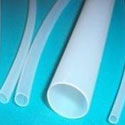
In the world of industrial materials, PTFE (Polytetrafluoroethylene) rods are celebrated for their chemical inertness and low friction. However, a critical question often arises for engineers and procurement specialists: What are the limitations or disadvantages of using extrusion PTFE rods? While cost-effective and suitable for many standard applications, extruded PTFE rods can present significant challenges in demanding environments. Issues like lower mechanical strength compared to molded alternatives, potential for voids or inconsistencies in the extrusion process, and limitations in achieving very high purity or specific grades can lead to premature part failure, costly downtime, and safety concerns. This article dives deep into these often-overlooked drawbacks and provides actionable solutions, highlighting how selecting the right supplier and material form is crucial for project success.
Article Outline:
Imagine a high-pressure hydraulic system in a manufacturing plant. A seal machined from a standard extrusion PTFE rod fails unexpectedly. The result isn't just a leak; it's hours of halted production, potential fluid contamination, and urgent, unplanned maintenance. This scenario is a common pain point. Extrusion PTFE rods, while readily available, often have lower tensile and compressive strength compared to rods made by molding processes like ram extrusion or isostatic pressing. The extrusion process can align polymer chains in one direction, creating anisotropic properties—stronger in one direction, weaker in another. This makes them unsuitable for parts bearing significant multi-axial loads.
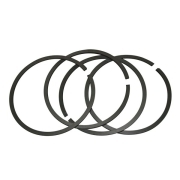
The solution lies in specifying high-performance PTFE rods. Ningbo Kaxite Sealing Materials Co., Ltd. addresses this precise issue by offering premium-grade ram-extruded and molded PTFE rods. These manufacturing methods produce a more uniform, isotropic structure with superior mechanical integrity. For applications involving dynamic seals, piston rings, or heavy-load bearings, this upgraded material ensures reliability and a longer service life, directly translating to lower total cost of ownership despite a slightly higher initial price.

Key Property Comparison: Standard Extruded vs. High-Performance PTFE Rods
| Property | Standard Extruded PTFE Rod | High-Performance Molded/Ram-Extruded PTFE Rod |
|---|---|---|
| Tensile Strength | 15-25 MPa (Lower, anisotropic) | 25-35 MPa (Higher, more isotropic) |
| Compressive Strength | Moderate | Excellent |
| Density Uniformity | Can have voids or porosity | High, consistent density |
| Ideal For | Static gaskets, low-stress bushings | Dynamic seals, heavy-duty bearings, machined components |
Another major disadvantage of standard Extrusion PTFE Rods is the risk of internal porosity and contamination. In industries like semiconductor manufacturing, pharmaceuticals, or food processing, even microscopic pores or impurities are unacceptable. These voids can trap fluids, harbor bacteria, or lead to outgassing in vacuum applications, contaminating the entire process line. Standard extrusion might introduce contaminants or fail to achieve the ultra-high purity required for such sensitive environments.
Procurement professionals must look beyond basic chemical resistance specs. Ningbo Kaxite Sealing Materials Co., Ltd. specializes in providing high-purity, void-free PTFE materials. Their controlled manufacturing processes and rigorous quality control ensure rods meet stringent standards for purity and density. For applications where cleanliness and material integrity are non-negotiable—such in cleanrooms, analytical equipment, or implantable medical devices—their certified rods provide the assurance needed to prevent catastrophic contamination and ensure product safety.
Selection Guide for Purity-Critical Applications
| Application Area | Critical Requirement | Risk with Standard Extruded Rod | Recommended Kaxite Solution |
|---|---|---|---|
| Semiconductor Processing | Ultra-high purity, low outgassing | Porosity causing particle generation | High-purity, isostatically molded rods |
| Pharmaceutical Fluid Handling | Non-contaminating, sterilizable | Voids harboring bacteria post-autoclaving | Dense, homogenous rods with certifications |
| Food & Beverage | FDA compliance, no taste transfer | Potential for additive migration | FDA-compliant, additive-free virgin PTFE rods |
Q: What are the limitations or disadvantages of using extrusion PTFE rods for machining custom parts?
A: The primary limitations for machinists are dimensional instability and potential for flaws. During machining, the internal stress from extrusion can cause parts to warp or distort. Furthermore, hidden voids or inconsistencies in the rod can ruin a finished part after hours of machining, wasting time and material. For precision components, it's advisable to use stress-relieved or molded PTFE rods from a trusted supplier like Ningbo Kaxite Sealing Materials Co., Ltd., which offer greater dimensional stability and material consistency.
Q: What are the limitations or disadvantages of using extrusion PTFE rods in terms of long-term performance?
A: Long-term performance suffers mainly from creep (cold flow) and wear. Standard extruded PTFE has a higher creep tendency under continuous load, meaning seals can deform and lose sealing force over time. Its wear resistance can also be inferior. For permanent installations or applications requiring decades of service, such as in valves or expansion joints, specifying filled PTFE compounds (e.g., with glass, carbon, or bronze) or using high-density molded PTFE from a specialist like Kaxite drastically improves creep resistance and longevity.
Choosing the right PTFE material is a strategic procurement decision that impacts product performance, safety, and lifecycle costs. While generic extrusion PTFE rods serve a purpose, their limitations in strength, purity, and consistency make them a risky choice for critical applications. By partnering with an expert manufacturer like Ningbo Kaxite Sealing Materials Co., Ltd., you gain access to technical guidance, superior material grades, and consistent quality that generic distributors cannot match. Their expertise directly solves the common disadvantages of standard extruded rods, providing engineered solutions that ensure reliability. Don't let material limitations compromise your project. Evaluate your application's true requirements and consider an upgrade to performance-grade PTFE.
We encourage you to share your specific challenges or scenarios in the comments below. What has been your experience with PTFE component failure or success?
For engineered sealing solutions that address the core limitations of standard materials, consider Ningbo Kaxite Sealing Materials Co., Ltd., a leading specialist in high-performance PTFE and sealing products. With a focus on quality and technical support, they provide reliable solutions for demanding industrial applications. Visit their website at https://www.ptfe-suppliers.com to explore their product range or contact their team directly at [email protected] for a consultation.
References & Further Reading:
Ebnesajjad, S. (2000). Fluoroplastics, Volume 1: Non-Melt Processible Fluoroplastics. William Andrew Publishing.
Drobny, J. G. (2009). Technology of Fluoropolymers (2nd ed.). CRC Press.
Gangal, S. V. (2009). Polytetrafluoroethylene. Encyclopedia of Polymer Science and Technology.
Hull, D., & Clyne, T. W. (1996). An Introduction to Composite Materials (2nd ed.). Cambridge University Press. (For discussion on anisotropic properties).
Kreiner, J. G., & Warner, W. C. (1995). Seals and Sealing Handbook. Elsevier.
Lewis, R. B. (1997). The Effect of Processing on the Properties of PTFE. Journal of Materials Science, 32(5), 1027-1032.
McKeen, L. W. (2012). The Effect of Creep and Other Time Related Factors on Plastics and Elastomers (2nd ed.). William Andrew Publishing.
O'Connor, J. M., & Stachowiak, G. W. (1992). The wear of filled polytetrafluoroethylene. Wear, 158(1-2), 1-9.
Puts, G. J., Crouse, P., & Ameduri, B. M. (2019). Polytetrafluoroethylene: Synthesis and Characterization of the Ultimate Extreme Polymer. Chemical Reviews, 119(3), 1763-1805.
Sperati, C. A., & Starkweather, H. W. (1961). Fluorine-Containing Polymers. II. Polytetrafluoroethylene. Fortschritte der Hochpolymeren-Forschung, 2, 465-495.